What Does It Really Take to Lead at the Top?
Leading at executive level is fundamentally different from managing day-to-day operations.
Executives are expected to do far more than simply deliver results. They must provide direction in times of uncertainty, shape organisational culture, develop people and ensure the long-term viability of their organisations.
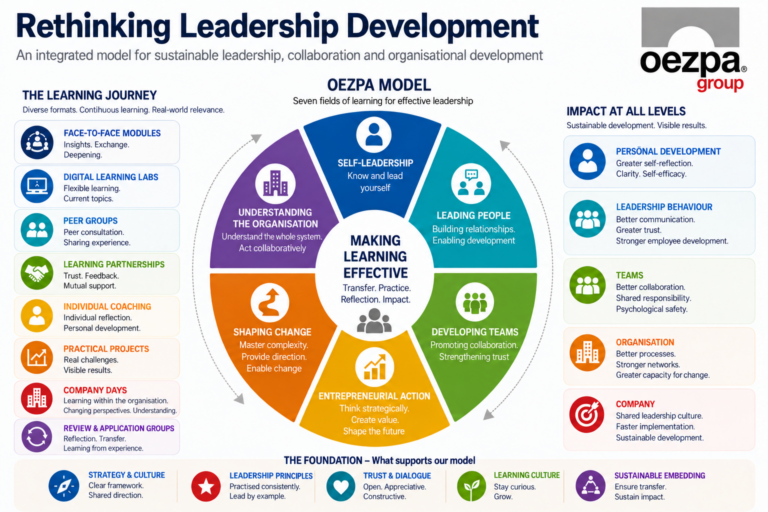
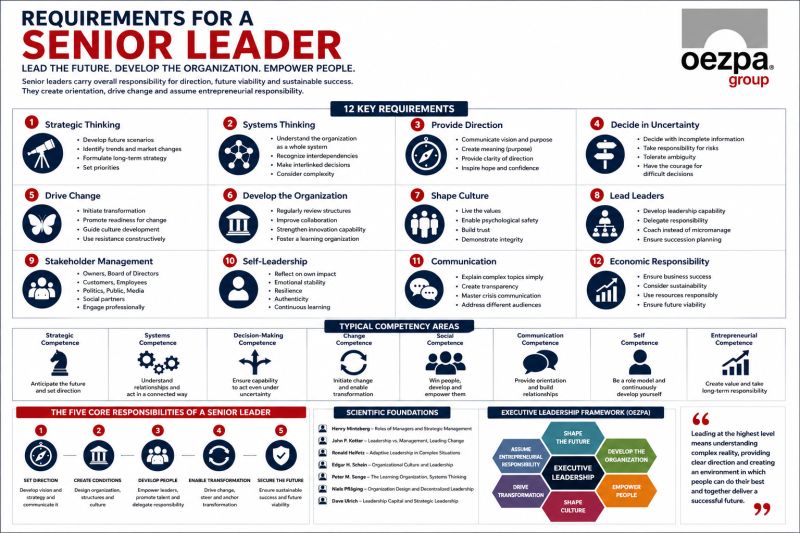
Based on my experience in executive coaching and organisational development, outstanding leaders excel in twelve key areas:
• Strategic thinking
• Systems thinking
• Providing direction and purpose
• Decision-making under uncertainty
• Leading transformation
• Organisational development
• Shaping culture
• Developing leaders
• Stakeholder management
• Self-leadership
• Communication
• Entrepreneurial responsibility
Leadership at the highest level does not mean having all the answers. It means creating the conditions in which people and organisations can succeed together.
The most effective leaders balance today’s performance with tomorrow’s opportunities. They combine strategic clarity with humility, courage with empathy, and business performance with human development.
Leadership is not simply about managing complexity – it is about creating clarity within complexity.